
How to Protect Your Mobile App Idea Before Hiring Developers
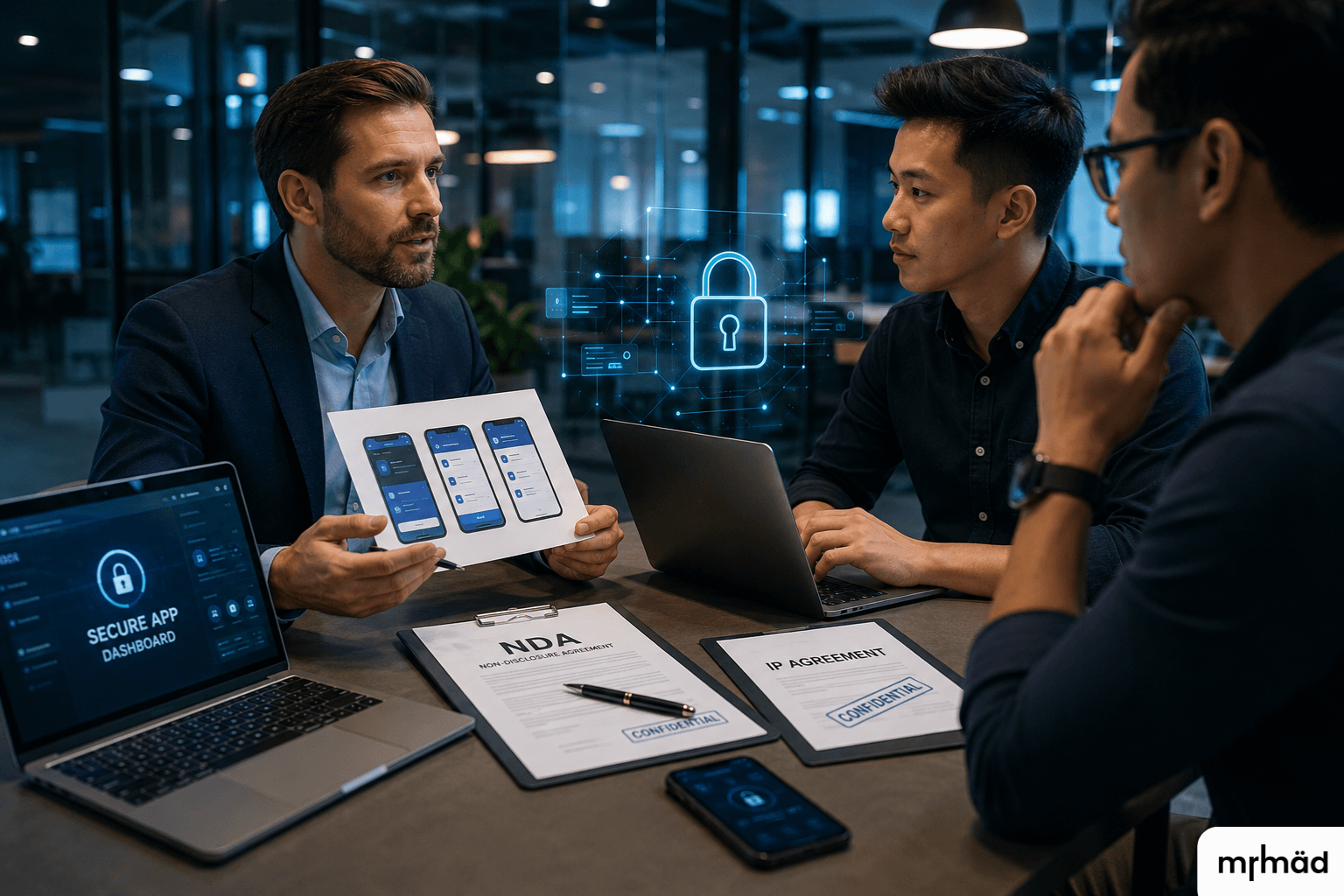
You have a brilliant mobile app idea. It’s an elegant solution to a massive market problem, and you can already see the user interface perfectly in your mind. But just as you prepare to take the leap and start looking for an engineering team, a paralyzing thought stops you in your tracks: What if the developers I hire steal my idea and launch it themselves?
It is a completely natural fear. Entrusting your intellectual property to an external development agency or a freelance software engineer requires a delicate balance of transparency and security. If you share too little, they cannot build your vision accurately; if you share too much without protection, you feel exposed.
Fortunately, building a high-performance application doesn’t require blind trust. By establishing a professional, strategic framework, you can collaborate safely with elite talent. Let’s look at exactly how to protect your mobile app idea before hiring developers so you can build your product with absolute peace of mind.
If you’re planning to kick off production smoothly, understanding the typical mobile app development timeline will help you see exactly where these protections fit into the initial discovery phase.
Quick Summary: How to Protect Your App Concept
To secure a mobile app idea before hiring, execute a signed Non-Disclosure and Non-Use Agreement (NDA) prior to sharing details, mandate explicit IP Assignment (Work-for-Hire) clauses in all contracts, document your concepts via timestamped wireframes, consider filing a Provisional Patent Application (PPA), and share technical specifics strictly on a modular, need-to-know basis.
The Reality Check: Do Developers Actually Steal Ideas?
Before diving into the legal mechanics, let’s unpack a truth that brings immediate comfort to most founders. In the technology ecosystem, established software development agencies and high-tier engineers rarely steal ideas.
This matters because, to a professional engineer, ideas are cheap, but execution is everything.
A raw app concept requires capital, meticulous UI/UX design, aggressive marketing, product-market fit iteration, and continuous technical maintenance to survive. Software engineers are in the business of building technology, not launching startups or managing customer acquisition funnels.
Furthermore, reputable development partners survive entirely on their professional reputation. For an established agency, stealing a client’s concept is corporate suicide. On the other hand, the risk escalates significantly when dealing with completely unvetted, cut-rate freelancers on public marketplaces. That is where systemic protection becomes non-negotiable.
The Blueprint: 5 Legal Safeguards for Tech Founders
Protecting your software architecture requires a layered defense. Here is the step-by-step legal blueprint every founder should implement before code is ever written.
1.Execute a Tailored Non-Disclosure Agreement (NDA):Before detailed discovery calls.
Never discuss the inner workings, unique algorithms, or exact monetization models of your app without a signed NDA. Crucially, make sure it includes a “Non-Use” covenant, explicitly stating that the recipient cannot use the shared information for their own commercial gain or development outside of your project.
2.Mandate Clear IP Assignment Clauses:Embedded in the master contract.
Under standard copyright laws, the person who writes a line of code owns it by default unless a contract states otherwise. Your development agreement must contain explicit Work Made for Hire and Intellectual Property Assignment provisions, legally ensuring that every asset, layout, and line of code belongs to your brand from the millisecond it is typed.
3.File a Provisional Patent Application (PPA):For proprietary algorithms or workflows.
If your mobile app relies on a truly novel technical methodology or a unique database architecture, consider filing a Provisional Patent Application (PPA) with the USPTO. This grants you a 12-month “Patent Pending” status at a fraction of the cost of a full patent, officially locking in your legal priority date.
4.Register Trademarks Early:Protecting your brand identity.
While you cannot legally protect a generic concept, you can protect its public manifestation. Register your app’s unique name, brand identity, and domain names immediately. This creates a public legal record that blocks copycats from hijacking your brand presence before launch.
5.Incorporate Non-Compete Covenants:Securing your industry niche.
Ensure your formal development contract restricts the agency or freelancer from building a directly competing application in your specific industry vertical for a defined window of time (typically 12 to 24 months post-collaboration).
Operational Tactics: Non-Legal Security Frameworks
Legal papers provide an excellent safety net, but smart operational workflows prevent issues from occurring in the first place. This is where strategic design meets practical security.
1. The “Need-to-Know” Modular Approach
The biggest mistake most people make is giving a new developer the keys to the entire ecosystem on day one. Instead, break your software development down into isolated modules.
For example, if your application features a revolutionary proprietary matching algorithm, keep that core logic separated. Your frontend developers building the profile settings, login states, and visual UI layouts do not need access to your core proprietary backend engines to perform their jobs flawlessly.
This matches standard industry workflows when you decide to hire a dedicated mobile app developer, where milestone-based access ensures security throughout the project lifecycle.
2. Establish a Bulletproof Paper Trail
Document your app concept extensively before you hop on an introductory call with an engineer. This is an essential phase of learning how to validate an app idea before development, ensuring your concepts are backed by solid logic. Use design tools like Figma to construct visual flows, and write a comprehensive Product Requirement Document (PRD) detailing every action.
Documentation Layer | What It Authenticates | Recommended Environment |
Product Requirement Document (PRD) | Detailed logic, feature lists, and user journey paths. | Notion / Google Docs |
UI/UX Wireframes & User Flows | Visual structures and interactive screen logic. | Figma / Adobe XD |
Timestamped Version Control | Immutable historical logging of architectural concepts. | GitHub / GitLab |
By keeping these files systematically dated and securely stored, you establish indisputable, pre-existing proof of ownership if a dispute ever arises down the road.
Common Protection Mistakes to Avoid
- The “Stealth Mode” Paralysis: Keeping your concept so deeply hidden that you never build or get real user feedback. If you force an agency to sign an NDA just to hear a high-level pitch like “It’s an AI tool for real estate agents,” they will likely decline. If you want your software to eventually launch successfully, you must pass the early hurdle of learning how to build an MVP app for your startup so you can gather real-world proof of concept without fear.
- Relying on Handshake Agreements: A developer saying “Your secret is safe with me” means absolutely nothing in a legal setting. If a provision isn’t written down, signed, and legally binding, it does not exist.
- Ignoring Future Maintenance Risks: Security doesn’t stop once the app is written. Unprotected code codebases can leak long after launch if your post-launch agreements are loose. Ensure your long-term contracts account for structural updates and privacy parameters, balancing these security steps with your ongoing monthly operational projections like the standard SaaS mobile app maintenance costs.
Moving Forward Responsibly
Protecting your mobile app idea isn’t about hiding it in a dark room; it’s about setting professional boundaries before sharing it with production teams. By deploying targeted NDAs, locking down clean IP assignment clauses, and organizing your development workflows modularly, you completely eliminate structural risk.
Don’t let the fear of a stolen concept stall your execution. Secure your foundational protections, hire premier engineering talent, and turn your vision into market-ready reality.
Frequently Asked Questions
1. Can you legally patent an app idea?
No, you cannot patent a raw concept or basic idea. You can only patent the specific, novel technical methodologies, software processes, or unique algorithmic utility models that make the application run.
2. What happens if a developer signs an NDA but still steals my app concept?
If a developer violates a signed NDA, you have immediate grounds for a breach of contract lawsuit. You can seek an emergency court injunction to halt their project deployment alongside pursuing financial damages for intellectual property theft.
3. Will top software development agencies refuse to sign an NDA?
Reputable software development agencies are highly accustomed to signing reasonable, mutually protective NDAs before reviewing detailed wireframes, PRDs, or proprietary codebases. However, they may decline to sign one for a basic introductory call where no secrets are shared.
4. Is a copyright enough to protect my mobile app?
A copyright automatically protects your original source code and visual UI design elements from direct duplication. It does not, however, protect the underlying business models, general mechanics, or functional concepts of the app.
5. How do I protect my mobile app idea when outsourcing overseas?
When outsourcing internationally, ensure your contracts explicitly state that all legal disputes are governed by the laws and courts of your home country, or partner with an offshore agency that maintains a registered corporate entity in your nation.
6. At what precise stage should I ask a developer to sign an NDA?
You should introduce an NDA immediately after an initial introductory call confirms a mutual fit, but strictly before you transmit any proprietary documentation, interactive wireframes, or custom database schemas.
7. What makes a “Work for Hire” clause so critical?
A “Work for Hire” clause ensures that all intellectual property rights and code generated by a contractor automatically vest with your company from the moment of creation, rather than remaining with the developer who wrote it.
8. Can I use a basic, one-page NDA template for software development?
While a basic NDA is better than a verbal agreement, short templates often omit essential protections regarding “non-use” parameters, precise trade secret definitions, and international enforcement mechanisms, leaving loops under close inspection.
9. Does sharing wireframes put my app concept at risk?
Sharing highly detailed, complete wireframes without legal protection does introduce risk, as they map out your complete app logic. Always wrap your wireframes in an NDA and share them on an phased, section-by-section basis during evaluation.
10. How can I safely pitch my app to get development quotes?
To get accurate quotes without over-exposing your IP, share a high-level scope document highlighting what the app accomplishes generally, while withholding the secret sauces, specialized backend integrations, or proprietary algorithms until an NDA is active.
Get best mobile app development services
Develop your business app
Conclusion
At the end of the day, securing your mobile app idea isn’t about building a fortress of secrecy that keeps people out; it’s about establishing professional, legally binding boundaries so you can safely let the right experts in.
While utilizing legal tools like NDAs, IP assignments, and provisional patents is absolutely vital to protect your baseline assets, remember that a protected idea sitting at a standstill is worth exactly zero. The market rewards the founders who take calculated risks, trust robust documentation over handshake agreements, and move efficiently from the drawing board into active development.
Don’t let the fear of a stolen concept stall your momentum. Secure your operational safeguards, partner with vetted engineering professionals, and shift your energy toward what truly matters: building an exceptional product that solves real user problems.
Quality Service For You
We deliver unique and blended experiences to our customers across the globe. From idea to execution and launch, we do ALL.
Backend Development:
Table of Contents
Why Mobile Apps Fail After Launch: 15 Common Reasons and How to Prevent Them
How to Calculate ROI for Mobile App Development in 2026
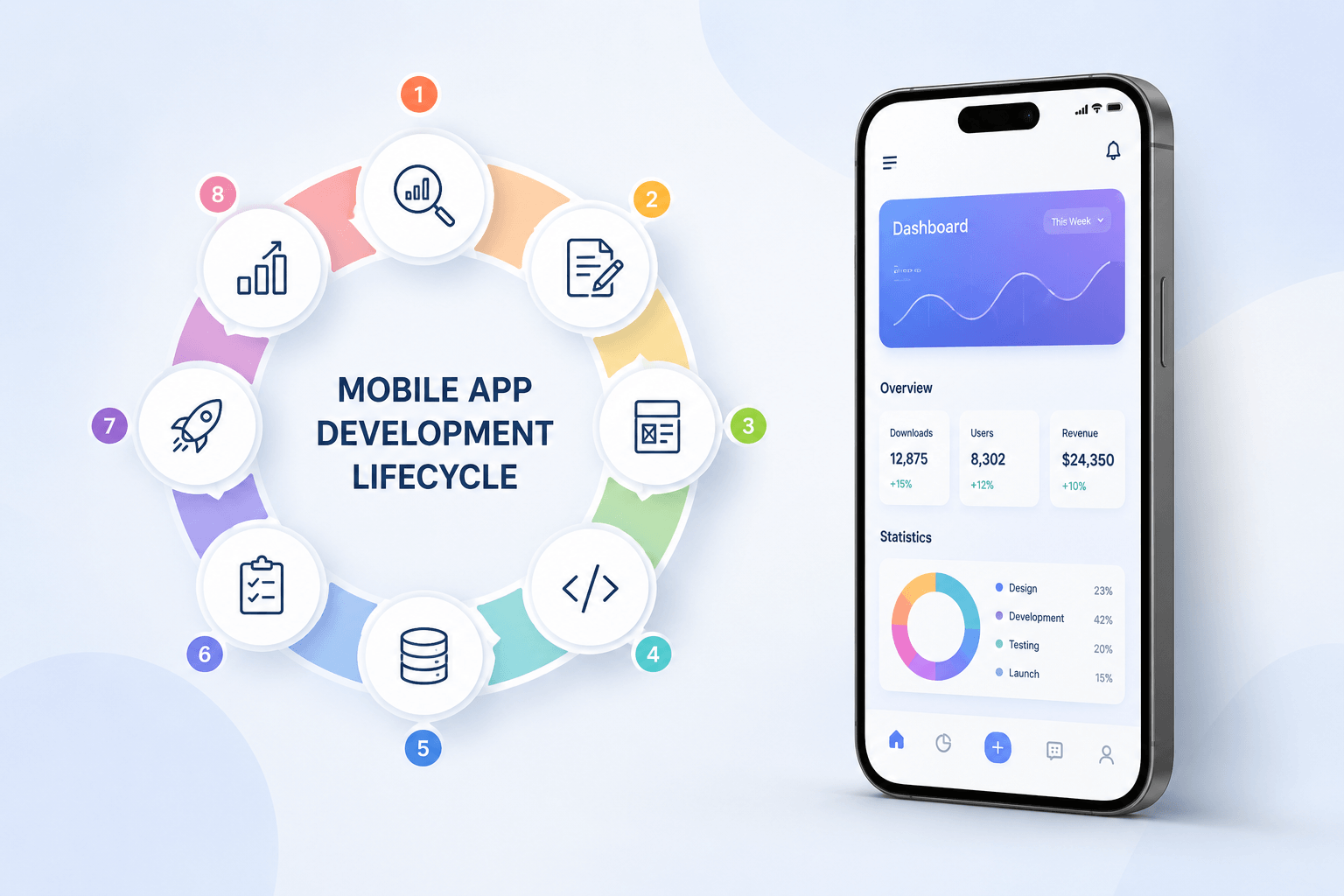
Mobile App Development Lifecycle: Complete 2026 Guide (8 Stages)
Book your consultation now
Related Post