The mobile app development process in 2025 has evolved rapidly with the rise of AI, cloud computing, and automation. Today, building a successful mobile app is no longer just about writing code — it involves a structured workflow of planning, designing, development, testing, deployment, and long-term maintenance.
Understanding the mobile app development process ensures higher quality, better user experience, and faster time-to-market. Unlike traditional agencies, working with a freelance expert like MrMobileAppDeveloper allows for direct communication, faster iterations, and a more cost-effective app development lifecycle.
A structured app development process ensures higher quality, better user experience, and faster time-to-market. Unlike agencies with long chains of communication, working with a freelance expert like MrMobileAppDeveloper offers direct collaboration, transparency, and faster iterations, making your app development journey smoother and more cost-effective.
Step 1 – Product Ideation & Concept Planning
Understanding the Problem & Goal
The first step is defining the purpose of your app. Ask questions like:
- What problem does it solve?
- Who will use it?
- What is the main goal or metric for success?
Defining the Target Audience
Knowing your audience is key to app success. Create user personas including demographics, behaviors, and pain points. This ensures features and design match your users’ expectations.
Conducting Competitor Research
Analyze competitors’ apps to identify:
- Features they offer
- Strengths and weaknesses
- Opportunities for differentiation
Feature Brainstorm List (Global Examples)
Brainstorm a list of features your app will include. Examples:
- Chat/messaging functionality
- Video streaming
- AR filters
- Payment gateways
Step 2 – App Requirement Document (PRD) by MrMobileAppDeveloper
Functional Requirements
Define what the app should do, including:
- Core features
- User interactions
- Admin panel functionality
Non-Functional Requirements
Include requirements like:
- Performance standards
- Security protocols
- Scalability needs
User Personas & User Stories
Document specific user stories like:
- “As a user, I want to log in via Google so I can start quickly.”
Technical Feasibility Study
Evaluate if the app is technically possible with your desired features and budget.
Step 3 – UX Research & Wireframing
Low-Fidelity Wireframes (User Flow)
Create basic sketches showing screen layout and user navigation flow.
Information Architecture
Organize app content so users can navigate intuitively.
Wireframing Tools Used
- Figma – collaborative design
- Adobe XD – interactive prototypes
- Balsamiq – quick low-fidelity sketches
Step 4 – UI/UX Design (Visual Prototyping)
Creating High-Fidelity Designs
Develop polished screen designs representing the final product.
Color, Typography & Branding
Ensure design aligns with brand identity and provides a consistent user experience.
Building Clickable Prototypes
Interactive prototypes allow stakeholders to test navigation and flow before development.
How MrMobileAppDeveloper Designs Modern UI
By combining user feedback and modern design principles, every app is intuitive, fast, and visually appealing.
Step 5 – Choosing the Right Tech Stack
Native App Development
- iOS – Swift / SwiftUI
- Android – Kotlin / Java
- To learn more about cross-platform development, you can also refer to the official Flutter documentation
Cross-Platform (Flutter / React Native)
Ideal for apps targeting multiple platforms with a single codebase.
Backend Technologies
- Node.js
- Laravel
- Firebase
- MongoDB / MySQL
Architecture Patterns (MVC, MVVM, Clean Architecture)
Structured patterns improve maintainability, scalability, and security.
Step 6 – App Development Phase (Frontend + Backend)
Frontend Development
- Implement UI designs
- Develop app screens
- Integrate APIs
Backend Development
- Database setup
- Authentication systems
- Server configuration
- Admin panel development
Real-Time Features (Chat, Video, Notifications)
Integrate essential functionalities for interactive apps.
Agile Sprint Planning by MrMobileAppDeveloper
Short development cycles allow for quick testing, feedback, and iterative improvements.
Step 7 – App Testing & QA
Functional Testing
Ensure all features work as intended.
API Testing
Verify that all APIs are responding correctly.
Performance Testing
Check app speed, loading times, and resource usage.
Device Compatibility Testing
Test on multiple devices and OS versions for consistent experience.
Automated Testing Tools
- XCTest
- Appium
- Firebase Test Lab
Step 8 – Deployment on Play Store & App Store
App Store Optimization (ASO)
Optimize titles, descriptions, and keywords for better discoverability.
Release Build Preparation
Prepare production-ready builds for Android and iOS.
Publishing Guidelines
- Android – Play Store guidelines
- iOS – App Store guidelines
Post-Launch Monitoring Tools
Track crashes, analytics, and user behavior to continuously improve the app.
Step 9 – App Maintenance & Version Upgrades
Bug Fixing & Regular Updates
Maintain app stability and fix any post-launch issues.
Security Patches
Regular updates ensure compliance with the latest security standards.
New Feature Additions
Keep your app relevant by adding features based on user feedback.
Maintenance Packages by MrMobileAppDeveloper
Freelance support ensures faster response times and cost efficiency compared to agencies.
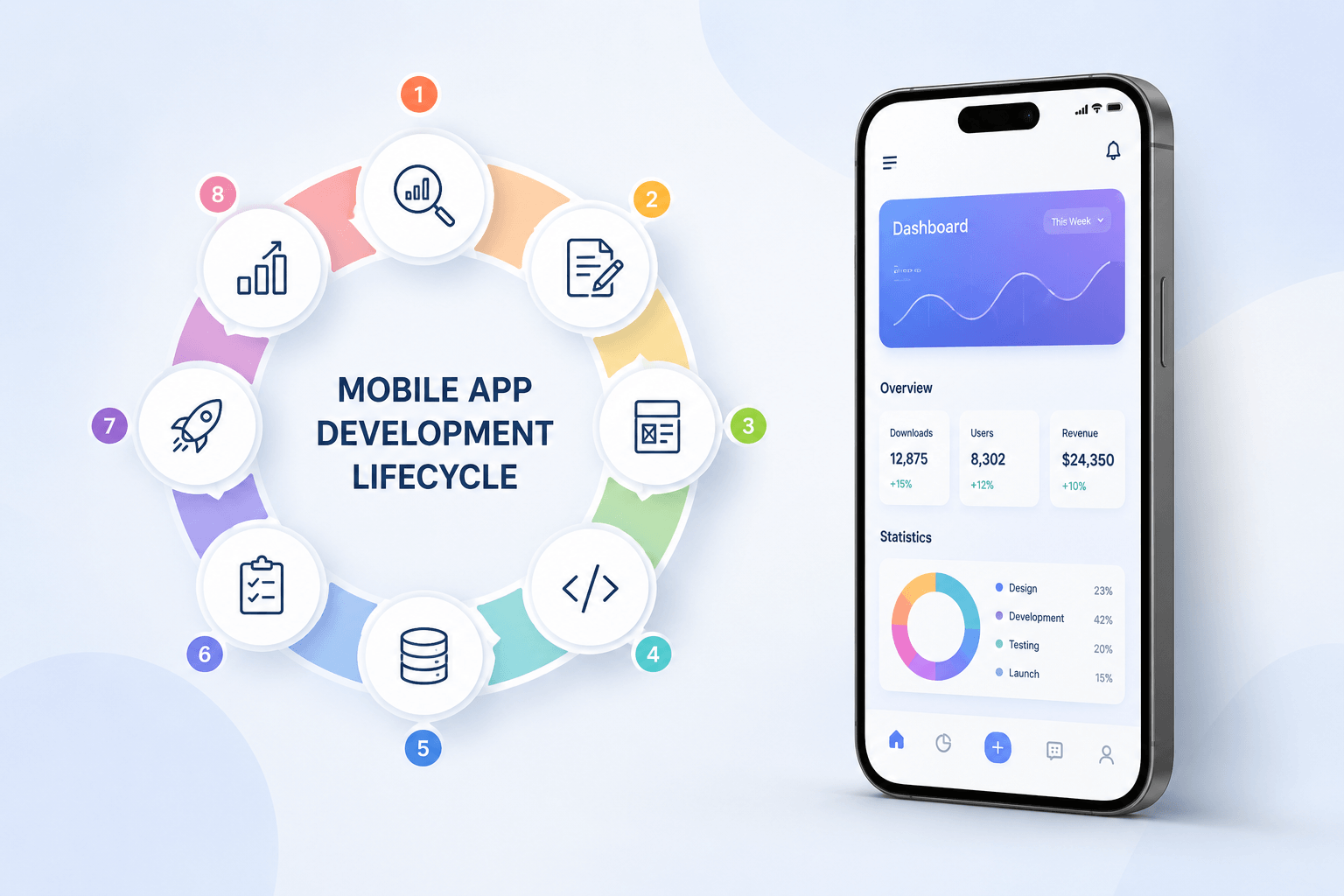
Complete Mobile App Development Life Cycle (Table)
Stage | Timeline | Deliverables |
Ideation & Planning | 1–2 weeks | PRD, feature list |
Design (UI/UX) | 2–4 weeks | Wireframes, prototypes |
Development | 6–16 weeks | Frontend + backend |
Testing | 2–3 weeks | QA-tested app |
Launch | 1 week | App Store + Play Store release |
Maintenance | Ongoing | Updates, bug fixes |
Mobile App Development Cost Breakdown (2025)
Cost by Complexity
App Type | Estimated Cost (USD) |
Simple App | $3,000 – $8,000 |
Medium App | $8,000 – $25,000 |
Advanced App | $25,000 – $50,000+ |
Cost by Technology
- Flutter – Affordable cross-platform
- React Native – Mid-range
- Native iOS/Android – Higher cost, high performance
Why Hire a Freelance App Developer Instead of an Agency?
Benefits of Working With MrMobileAppDeveloper
- 22+ years of experience
- 550+ apps delivered globally
- Expert in native and cross-platform development
- Custom-built apps, no templates
- OWASP-based security compliance
- Transparent pricing and faster communication
- Dedicated freelance support
Case Studies & Real-Life Examples
- On-demand apps
- Dating apps
- AR-based apps
- Banking/finance apps
Healthcare apps

 Contact MrMobileAppDeveloper today to start your mobile app journey!