
Mobile App Development Timeline in 2026: Complete & Powerful Guide to Build an App Faster

The application often offers role-based access control, allowing administrators to manage users and assign permissions.
In today’s mobile-first digital world, launching a mobile application has become one of the most effective ways for businesses to reach customers, increase engagement, and improve digital services. Mobile apps provide faster performance, better usability, and stronger customer retention compared to traditional websites.
However, before beginning the development process, businesses often ask a common question:
How long does it take to build a mobile app?
Understanding the mobile app development timeline helps companies estimate project duration, control development costs, and plan product launches strategically.
In most cases, mobile applications take 3 to 9 months to develop depending on the complexity of the project, features required, development platform, and testing requirements. While simple applications can be launched quickly, complex enterprise apps may require a longer development cycle.
This guide explains the complete mobile app development timeline, development stages, technologies used, and the factors that influence how quickly an application can be built.
Businesses working with experienced professionals like Mr Mobile App Developer can significantly streamline the process and launch high-quality applications efficiently.
What Is a Mobile App Development Timeline?
The mobile app development timeline refers to the total time required to transform an app idea into a fully functional product that users can download from an app store.
The development journey typically includes several phases:
Idea validation
Product planning
UI/UX design
Application development
Testing and quality assurance
App store submission and launch
Each stage contributes to the total project duration.
According to industry research, most mobile apps require 3–9 months for complete development depending on complexity and resources.
Proper planning is essential because rushing development often results in bugs, poor user experience, and expensive fixes later.
Average Time Required to Build a Mobile App
The mobile app development timeline varies depending on the complexity of the application.
| App Type | Estimated Development Time |
|---|---|
| Simple mobile apps | 2 – 4 months |
| Medium complexity apps | 4 – 7 months |
| Complex enterprise apps | 7 – 12+ months |
Simple Mobile Apps
Simple applications typically include basic functionality with minimal integrations.
Examples include:
Calculator apps
Event apps
Informational business apps
Common Features
Login systems
Information display
Basic user interaction
These apps usually require less development time because they rely on limited backend infrastructure.
Medium Complexity Apps
Medium complexity applications include additional functionality and integrations.
Examples include:
E-commerce apps
Fitness tracking apps
Booking platforms
Typical Features
Payment systems
User dashboards
API integrations
Push notifications
These apps require additional development time due to backend architecture and third-party services.
Complex Mobile Apps
Complex applications involve advanced architecture and large-scale infrastructure.
Examples include:
Fintech platforms
Ride-sharing applications
Social media networks
AI-powered mobile apps
These apps require sophisticated backend systems, advanced security measures, and extensive testing.
Stages of the Mobile App Development Timeline
Every successful application follows a structured development process.
1. Idea Validation and Market Research
Estimated Time: 1–2 weeks
Before development begins, businesses must validate their app idea and analyze market demand.
Key Activities
Competitor analysis
Market research
Feature planning
User persona development
This step ensures the application solves a real problem and targets the right audience.
2. Product Planning and MVP Strategy
Estimated Time: 1–2 weeks
After validating the idea, the next stage focuses on planning the development roadmap.
Sprint Planning Includes
Feature prioritization
MVP definition
Development roadmap creation
Timeline estimation
Why MVP Development Matters
An MVP (Minimum Viable Product) contains the core features required to launch the application and gather user feedback.
Benefits of MVP development include:
Faster market entry
Reduced development costs
Early user feedback
Many startups successfully launch MVP versions before expanding their applications.
3. UI/UX Design
Estimated Time: 2–4 weeks
User experience is one of the most important factors in mobile app success.
Design Process
Designers create:
Wireframes
User flows
Interactive prototypes
Visual interface designs
UX Design Principles
Effective mobile app design focuses on:
Intuitive navigation
Minimal user effort
Fast loading interfaces
Clear visual hierarchy
A well-designed UI improves user engagement and retention.
4. Mobile App Development
Estimated Time: 2–6 months
This stage is the most time-intensive part of the mobile app development timeline.
Development Layers
App development typically includes:
Frontend development
Backend development
API integration
Database setup
Frontend Development
The frontend controls the interface users interact with.
Common technologies include:
Flutter
React Native
Swift
Kotlin
Backend Development
The backend manages:
User authentication
Databases
Server logic
Application security
A scalable backend ensures the application can support growing user traffic.
5. Testing and Quality Assurance
Estimated Time: 2–4 weeks
Testing ensures the application functions properly across devices and operating systems.
Types of Testing
Testing processes usually include:
Functional testing
Usability testing
Performance testing
Security testing
Extensive testing ensures the app launches with minimal issues and provides a reliable user experience.
6. App Store Submission and Launch
Estimated Time: 1–2 weeks
After testing is completed, developers prepare the application for release.
App Store Submission Steps
App Store Optimization (ASO)
App screenshots and descriptions
Compliance with platform guidelines
Both Apple and Google review applications before publishing them on their app stores.
Technologies Used in Modern Mobile App Development
Modern mobile apps are built using powerful frameworks and development tools.
Flutter Development
Flutter enables developers to build Android and iOS apps using a single codebase.
Benefits include:
Faster development
Consistent UI design
Reduced maintenance costs
React Native Development
React Native is another popular cross-platform development framework.
Advantages include:
Code reuse across platforms
Rapid development cycles
Large developer ecosystem
Native App Development
Native development uses platform-specific technologies.
Examples include:
Swift for iOS apps
Kotlin for Android apps
Native applications offer the best performance and full access to device features.
Factors That Affect the Mobile App Development Timeline
Several factors influence how long it takes to build a mobile application.
App Complexity
Applications with advanced features require more development time.
Examples include:
AI systems
Real-time messaging
Payment integrations
Location tracking
Third-Party Integrations
Integrating external services adds complexity.
Examples include:
Payment gateways
Maps and geolocation APIs
Analytics platforms
Security Requirements
Applications handling financial or personal data require additional security measures such as:
Data encryption
Secure authentication
Compliance testing
Testing Scope
Applications must work across multiple devices, operating systems, and screen sizes. Extensive testing improves reliability but increases development time.
Native vs Cross-Platform Development Timeline
Choosing the right development approach significantly affects the project timeline.
Native Development Timeline
Native apps require separate codebases for iOS and Android.
Advantages include:
Higher performance
Platform optimization
Access to advanced features
However, development usually takes longer.
Cross-Platform Development Timeline
Cross-platform frameworks allow developers to build apps for multiple platforms simultaneously.
Advantages include:
Faster development
Lower development costs
Easier maintenance
Many startups prefer cross-platform development to launch products faster.
Why Businesses Choose Mr Mobile App Developer
Many startups and enterprises prefer working with Mr Mobile App Developer, an experienced freelance mobile app developer specializing in modern mobile technologies.
Services Include
Android App Development
iOS App Development
Flutter Development
React Native Development
IoT App Solutions
WebRTC Applications
With years of experience and hundreds of successful projects, Mr Mobile App Developer helps businesses launch scalable and high-performance mobile applications efficiently.
Tips to Reduce Mobile App Development Time
Businesses can shorten development timelines by following proven strategies.
Start With an MVP
Launching an MVP allows businesses to validate ideas quickly and improve the product later.
Use Agile Development
Agile methodology divides projects into smaller sprints for faster delivery.
Focus on Core Features
Prioritizing essential features ensures quicker development and faster launch.
Work With Experienced Developers
Experienced developers minimize errors and optimize development workflows.
Frequently Asked Questions
How long does it take to develop a mobile app?
Most mobile apps take 3 to 9 months depending on complexity and features.
What is the fastest way to build an app?
Launching a Minimum Viable Product (MVP) is usually the fastest method.
Does cross-platform development reduce development time?
Yes. Frameworks like Flutter and React Native allow developers to build apps for multiple platforms using a single codebase.
Can freelance developers build apps faster?
Yes. Freelancers often provide faster communication, flexible schedules, and efficient workflows.
Ready to Build Your Mobile App?
If you are planning to develop a mobile application for your business, working with an experienced developer can make the process faster and more efficient.
Mr Mobile App Developer helps startups, entrepreneurs, and enterprises build powerful mobile applications using modern technologies and scalable architectures.
Whether you want to build a Flutter app, React Native app, Android app, or iOS app, expert guidance ensures your project launches successfully.
👉 Learn more about mobile app development services:
https://www.mrmobileappdeveloper.com
Get best mobile app development services
Develop your business app
Conclusion
Understanding the mobile app development timeline is essential for businesses planning to launch a mobile application in 2026 and beyond.
Development time depends on multiple factors including project complexity, features, integrations, and testing requirements. While simple apps can be launched within a few months, complex enterprise solutions often require longer development cycles to ensure reliability, security, and scalability.
By following a structured development process, focusing on essential features, and working with experienced professionals such as Mr Mobile App Developer, businesses can successfully transform their ideas into powerful mobile applications.
Careful planning, modern technologies, and skilled development expertise are the key elements that help organizations launch successful mobile apps that deliver long-term value to users and businesses.
Quality Service For You
We deliver unique and blended experiences to our customers across the globe. From idea to execution and launch, we do ALL.
Backend Development:
Table of Contents
Why Mobile Apps Fail After Launch: 15 Common Reasons and How to Prevent Them
How to Calculate ROI for Mobile App Development in 2026
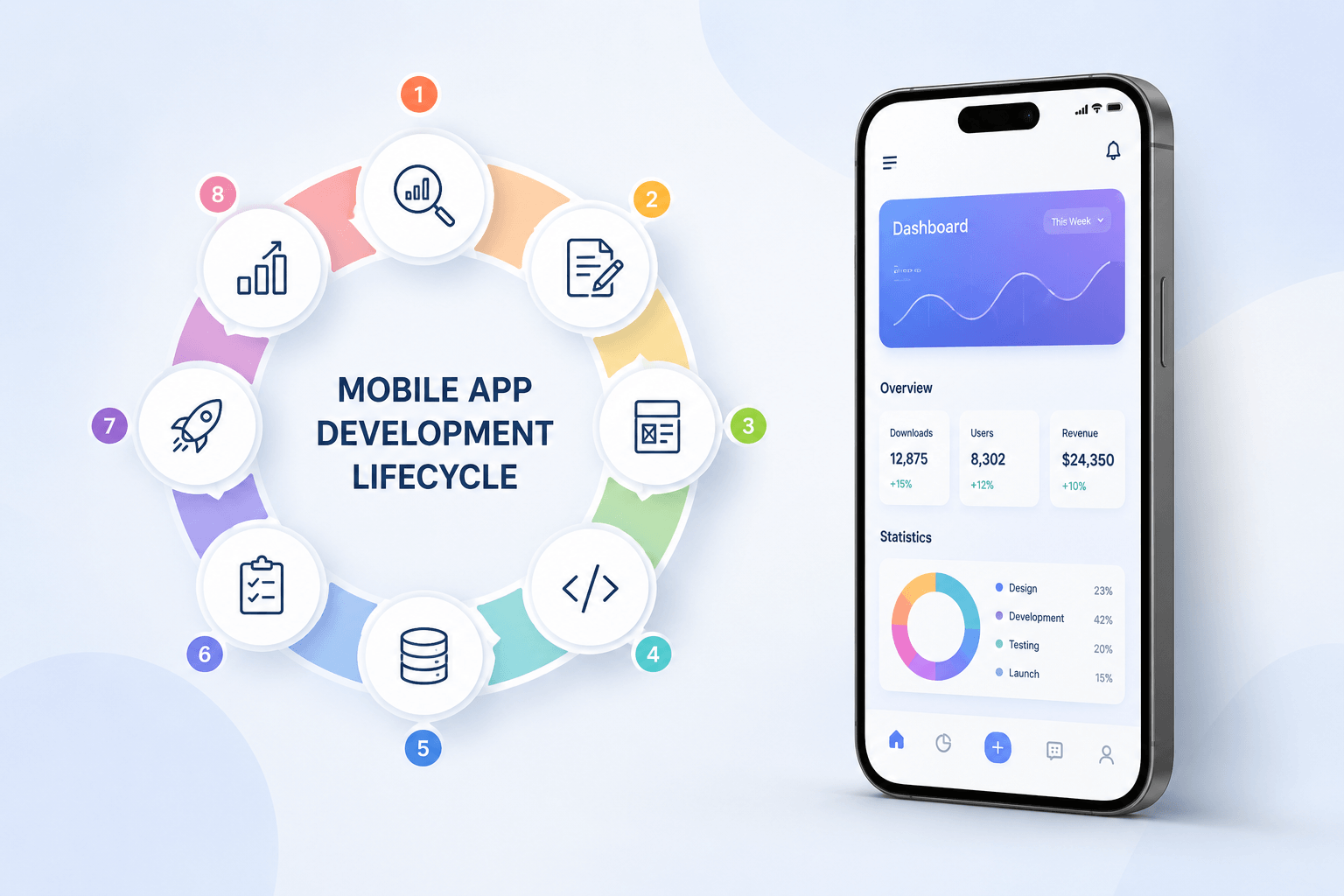
Mobile App Development Lifecycle: Complete 2026 Guide (8 Stages)

Book your consultation now
Related Post