
How to Build a SaaS Mobile App in 2026: Complete Developer Guide (Cost, Stack & Timeline)

Building a SaaS mobile app in 2026 is one of the highest-ROI investments a startup or business can make. But most founders underestimate the complexity — wrong tech stack choices, unclear pricing models, missed scalability requirements, and poor developer selection can turn a strong idea into an expensive failure.
This guide covers everything you need to know: what a SaaS mobile app actually requires, the best tech stacks in 2026, realistic cost breakdowns, development timelines, and how to find and hire the right developer for your project. Whether you’re building a B2B platform, a subscription-based consumer app, or an enterprise SaaS tool, this guide is built for you.
What Is a SaaS Mobile App and Why It Is Different From a Regular App
A SaaS (Software as a Service) mobile app delivers software functionality through a subscription model over the internet — users pay monthly or annually to access features rather than making a one-time purchase. Unlike standard apps, SaaS mobile apps require multi-tenancy architecture, subscription billing integration, user role management, data isolation per client, and scalable backend infrastructure designed for growth.
In 2026, the SaaS mobile market is expanding rapidly across sectors including HR management, field workforce tracking, fintech, telemedicine, e-learning, and real estate. Businesses across the USA, UK, UAE, and India are investing in SaaS apps because recurring revenue models deliver predictable cash flow and stronger long-term valuation compared to one-time-purchase software.
Key characteristics that separate a SaaS mobile app from a standard app:
- Multi-tenant architecture: Multiple clients share one codebase but have isolated data environments
- Subscription billing: Stripe, Razorpay, or in-app purchase integration for recurring payments
- Role-based access control: Admin, manager, and user-level permissions within the same app
- Scalable cloud backend: AWS, GCP, or Firebase infrastructure that scales with user growth
- Analytics dashboard: Real-time usage data and reporting for both admins and clients
Best Tech Stack for SaaS Mobile App Development in 2026
Choosing the right tech stack is the single most important technical decision in SaaS mobile development. The wrong choice leads to performance bottlenecks, high maintenance costs, and developer hiring difficulties down the line.
Flutter — Best for Cross-Platform SaaS Apps
Flutter remains the top choice for SaaS mobile apps targeting both Android and iOS from a single codebase in 2026. Google’s framework delivers near-native performance, a rich widget library, and significantly lower development cost compared to building separate native apps. For SaaS products where speed to market matters, Flutter reduces development time by 30-40% compared to building two separate native codebases.
Mr Mobile App Developer specializes in Flutter SaaS development — explore the complete Flutter app development services for SaaS, enterprise, and startup use cases.
React Native — Best for JavaScript Teams
React Native is the preferred choice for teams with existing JavaScript expertise or those who need to share code between a web dashboard and a mobile app. Its large ecosystem, strong community support, and Meta backing make it a reliable long-term choice for SaaS platforms. For SaaS apps that require real-time features like chat, notifications, or live data feeds, React Native integrates smoothly with WebSocket and Firebase.
For React Native SaaS development, review the detailed React Native app development services and available project types.
Native Android and iOS — Best for Performance-Critical SaaS
Native development using Kotlin (Android) and Swift (iOS) delivers the highest performance and deepest platform integration. For SaaS apps in healthcare, fintech, or field workforce management where device sensors, biometrics, and background processing are critical, native development is the right choice despite the higher cost. Review the Android app development services and iOS app development services for native SaaS options.
Backend and Infrastructure Stack
A production-ready SaaS mobile app requires a scalable backend. Recommended backend stack for 2026:
- js or Python (FastAPI): REST API or GraphQL layer handling business logic
- PostgreSQL or MongoDB: Relational or document database depending on data structure
- AWS / GCP / Firebase: Cloud hosting with auto-scaling and CDN support
- Stripe or Razorpay: Subscription billing with webhook-based lifecycle management
- Redis: Session management and caching for high-traffic SaaS products
SaaS Mobile App Development Cost in 2026
SaaS mobile app cost varies significantly based on complexity, platform choice, feature depth, and developer location. Here is a realistic breakdown for 2026:
Tier 1 — MVP SaaS App ($15,000 – $35,000)
An MVP SaaS mobile app includes core subscription features, user authentication, role-based access, a basic admin dashboard, and payment integration. Suitable for startups validating their SaaS idea with real users before investing in full-scale development. Timeline: 8–14 weeks.
Tier 2 — Mid-Complexity SaaS App ($35,000 – $80,000)
Includes advanced multi-tenancy, custom analytics dashboards, third-party API integrations (CRM, ERP, messaging), push notifications, offline mode, and a polished UI/UX. Suitable for established businesses launching a serious B2B or B2C SaaS product. Timeline: 14–24 weeks.
Tier 3 — Enterprise SaaS App ($80,000 – $300,000+)
Full-scale enterprise SaaS with white-labeling, AI/ML features, IoT integration, advanced security compliance (HIPAA, GDPR, SOC2), multi-region deployment, and dedicated DevOps infrastructure. Suitable for enterprises and funded startups targeting large business clients. Timeline: 24–52 weeks.
For a detailed cost breakdown specific to your SaaS product, review the complete guide on AI agent app development cost in 2026.
SaaS Mobile App Development Timeline in 2026
Understanding development phases helps set accurate expectations with your team and investors. Here is the standard timeline for a mid-complexity SaaS mobile app:
Phase 1 — Discovery and Architecture (2–3 Weeks)
Define user roles, subscription tiers, core features, data model, API architecture, and third-party integrations. This phase produces a Technical Requirements Document (TRD) and system architecture diagram that guides the entire build.
Phase 2 — UI/UX Design (2–4 Weeks)
Wireframes, user flow mapping, and high-fidelity UI design for all screens. SaaS apps require particular attention to onboarding flows, dashboard design, and subscription management screens as these directly impact trial-to-paid conversion rates.
Phase 3 — Backend Development (4–8 Weeks)
API development, database schema implementation, authentication system, subscription billing integration, role-based access control, and cloud infrastructure setup. This is the most complex phase of SaaS development.
Phase 4 — Mobile App Development (4–8 Weeks)
Frontend development connecting the mobile UI to the backend API. Includes all user-facing screens, real-time features, push notifications, offline capability, and payment flow integration.
Phase 5 — Testing and QA (2–3 Weeks)
Unit testing, integration testing, security testing, performance testing under load, and cross-device compatibility validation. For SaaS apps handling financial or health data, penetration testing is also required.
Phase 6 — App Store Submission and Launch (1–2 Weeks)
App Store and Google Play submission, policy compliance review, listing optimization (ASO), and production deployment. The full end-to-end mobile app development timeline is covered in detail in the mobile app development timeline guide for 2026.
Key Features Every SaaS Mobile App Needs in 2026
These features are non-negotiable for a production-ready SaaS mobile app:
- Multi-tenancy: Each client operates in an isolated data environment within a shared infrastructure
- Subscription billing: Multiple pricing tiers, free trials, upgrades, downgrades, and cancellation flows
- Role-based access control: Granular permissions per user role across all app features
- Onboarding flow: Guided setup that activates users quickly and reduces churn in the first 30 days
- Analytics dashboard: Real-time usage metrics, revenue tracking, and user activity reporting
- Push notifications: Transactional and marketing notifications with user preference controls
- Offline mode: Core features remain accessible without internet connection
- Security and compliance: Data encryption, secure authentication (OAuth 2.0, biometrics), audit logs
- API integrations: CRM, ERP, Slack, Zapier, and other tools your clients already use
- White-labeling support: Custom branding per client for B2B SaaS products
Platform Comparison: Flutter vs React Native vs Native for SaaS
The right platform choice depends on your SaaS product’s specific requirements. Here is a direct comparison for 2026:
Flutter: Best overall choice for most SaaS products. Single codebase for Android and iOS, strong performance, growing ecosystem, lower total cost. Slight disadvantage for apps requiring deep platform-specific hardware integration.
React Native: Best for JavaScript teams and products with shared web/mobile codebases. Large developer pool, excellent third-party library support. Performance slightly behind Flutter for animation-heavy interfaces.
Native Android/iOS: Best for performance-critical SaaS in healthcare, fintech, or field operations. Highest cost and longest timeline but maximum platform control and performance.
For a detailed platform decision framework, review the complete Android vs iOS vs Flutter vs React Native comparison for 2026.
How to Add AI to Your SaaS Mobile App in 2026
AI features are becoming a competitive necessity in SaaS products. In 2026, the most valuable AI additions to SaaS mobile apps include:
- AI-powered analytics: Predictive insights and usage pattern recognition for both admins and end users
- Intelligent onboarding: Personalized setup flows that adapt based on user behavior and role
- In-app AI assistant: Context-aware chatbot that helps users navigate features and troubleshoot issues
- Smart notifications: ML-driven notification timing that maximizes open rates and reduces fatigue
- Automated reporting: AI-generated summaries of usage data and business metrics
Integrating AI into an existing SaaS mobile app requires planning at the architecture level, not as an afterthought. The complete technical guide to how to add AI to an existing mobile app covers integration approaches, API options, and cost implications.
How to Hire the Right Developer for Your SaaS Mobile App
Most SaaS projects fail not because of the idea but because of poor developer selection. Here is what to evaluate:
Technical Skills to Verify
- Experience with multi-tenant architecture and data isolation patterns
- Subscription billing integration (Stripe, Razorpay, App Store subscriptions)
- Cloud infrastructure experience (AWS, GCP, Firebase) with auto-scaling setup
- Security implementation: OAuth 2.0, JWT, data encryption, secure API design
- Relevant platform experience: Flutter, React Native, Kotlin, or Swift
Portfolio and Process Red Flags
- No live SaaS products in portfolio — only simple apps or demo projects
- Cannot explain multi-tenancy architecture in simple terms
- No clear process for requirements documentation before development starts
- Quotes a fixed price without asking detailed questions about your requirements
- No mention of testing, QA, or post-launch support in their proposal
The complete framework for developer evaluation is covered in the guide to hiring a dedicated mobile app developer in 2026, including interview questions, rate benchmarks, and red flags to avoid.
For Flutter-specific SaaS projects, the Flutter developer hiring guide for 2026 provides framework-specific interview questions and assessment criteria.
Real SaaS Products Built by Mr Mobile App Developer
Understanding how SaaS mobile apps perform in production requires looking at real projects. Here are relevant examples from the portfolio:
Field Workforce Management SaaS — Arrowtrack Solutions (TaskCheck)
A multi-tenant field workforce tracking SaaS app built for Arrowtrack Solutions. TaskCheck enables organizations to monitor field teams in real time, assign tasks, track completion, and generate reports. Delivered for Android and iOS with role-based access for admins, managers, and field agents. Live on both Google Play and Apple App Store.
Project Management SaaS — TIMU Spaces
An all-in-one collaboration and productivity SaaS platform with modules for video meetings, real-time messaging, project planning, file sharing, task automation, and AI-powered insights. Built with multi-tenant architecture supporting teams and organizations of varying sizes across multiple industries.
Fintech SaaS — BRISKPE Cross-Border Payments
A cross-border payment SaaS platform for exporters, freelancers, and digital businesses. Features include multi-currency wallet, KYC onboarding, transaction management, currency conversion, invoice generation, compliance modules, and real-time analytics. Live on both Google Play and App Store.
Review the complete portfolio of delivered projects and detailed case studies for in-depth technical breakdowns of each project.
Frequently Asked Questions — SaaS Mobile App Development 2026
Q: How much does it cost to build a SaaS mobile app in 2026?
A SaaS mobile app costs between $15,000 and $300,000+ depending on complexity, platform, and feature depth. An MVP SaaS app with core subscription features costs $15,000–$35,000. A mid-complexity B2B SaaS platform with advanced multi-tenancy, analytics, and integrations costs $35,000–$80,000. Enterprise-grade SaaS with AI features, compliance, and white-labeling starts at $80,000.
Q: How long does it take to build a SaaS mobile app?
A SaaS mobile app MVP takes 8–14 weeks. A mid-complexity SaaS product takes 14–24 weeks. Enterprise SaaS with full feature sets and compliance requirements takes 24–52 weeks. Timeline depends on feature complexity, number of integrations, team size, and whether discovery and design are completed before development begins.
Q: Should I use Flutter or React Native for my SaaS mobile app?
Flutter is the better choice for most SaaS products in 2026 because it delivers near-native performance on both Android and iOS from a single codebase, reducing total development cost by 30–40% compared to native development. React Native is preferable for teams with strong JavaScript expertise or products that share code between a web dashboard and a mobile app.
Q: What is the difference between a regular mobile app and a SaaS mobile app?
A regular mobile app serves a single user or organization with a fixed feature set. A SaaS mobile app serves multiple clients (tenants) from a single codebase with isolated data environments, subscription-based billing, role-based access control, and scalable cloud infrastructure. SaaS apps require significantly more backend architecture planning and security implementation than standard apps.
Q: Can AI features be added to a SaaS mobile app?
Yes. AI features including predictive analytics, intelligent notifications, in-app AI assistants, automated reporting, and smart onboarding flows can be integrated into SaaS mobile apps using APIs from OpenAI, Google Gemini, or custom ML models. AI integration is most effective when planned at the architecture level rather than added after launch.
Q: How do I scale a SaaS mobile app as user numbers grow?
Scaling a SaaS mobile app requires horizontal scaling of the backend (adding server instances behind a load balancer), database read replicas for query performance, CDN delivery for static assets, Redis caching for session and API response data, and auto-scaling rules on cloud infrastructure. Planning for scale starts at the architecture phase, not after performance problems appear.
Get best mobile app development services
Develop your business app
Conclusion
Start Building Your SaaS Mobile App with Mr Mobile App Developer
With 22+ years of mobile and web development experience, 550+ delivered projects, and an A+ client satisfaction rating, Mr Mobile App Developer has the technical depth and SaaS-specific expertise to take your product from concept to a production-ready, scalable application.
Services available across Flutter, React Native, native Android and iOS, and full-stack SaaS backend development — covering everything from MVP validation to enterprise-scale platforms.
Quality Service For You
We deliver unique and blended experiences to our customers across the globe. From idea to execution and launch, we do ALL.
Backend Development:
Table of Contents
Why Mobile Apps Fail After Launch: 15 Common Reasons and How to Prevent Them
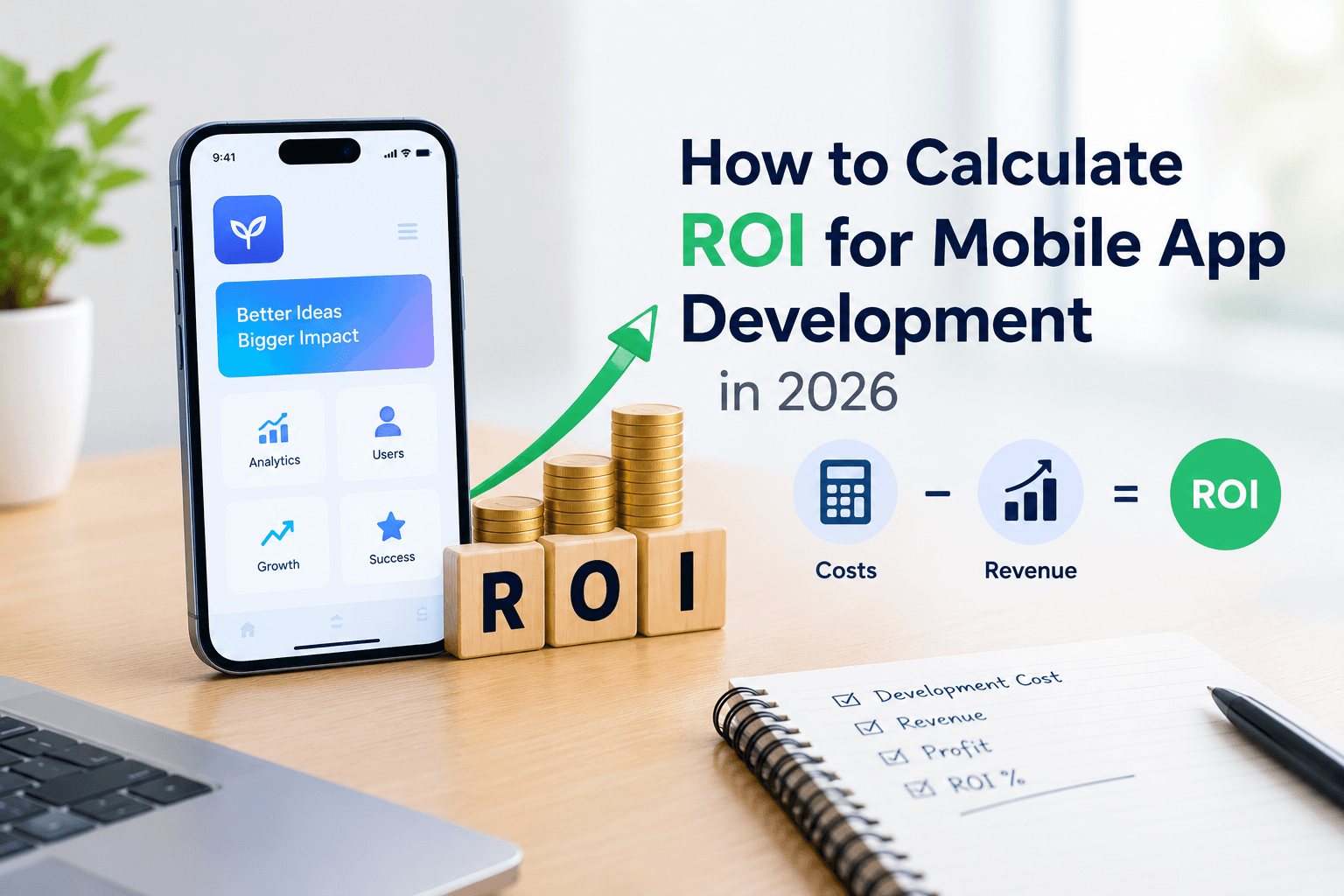
How to Calculate ROI for Mobile App Development in 2026
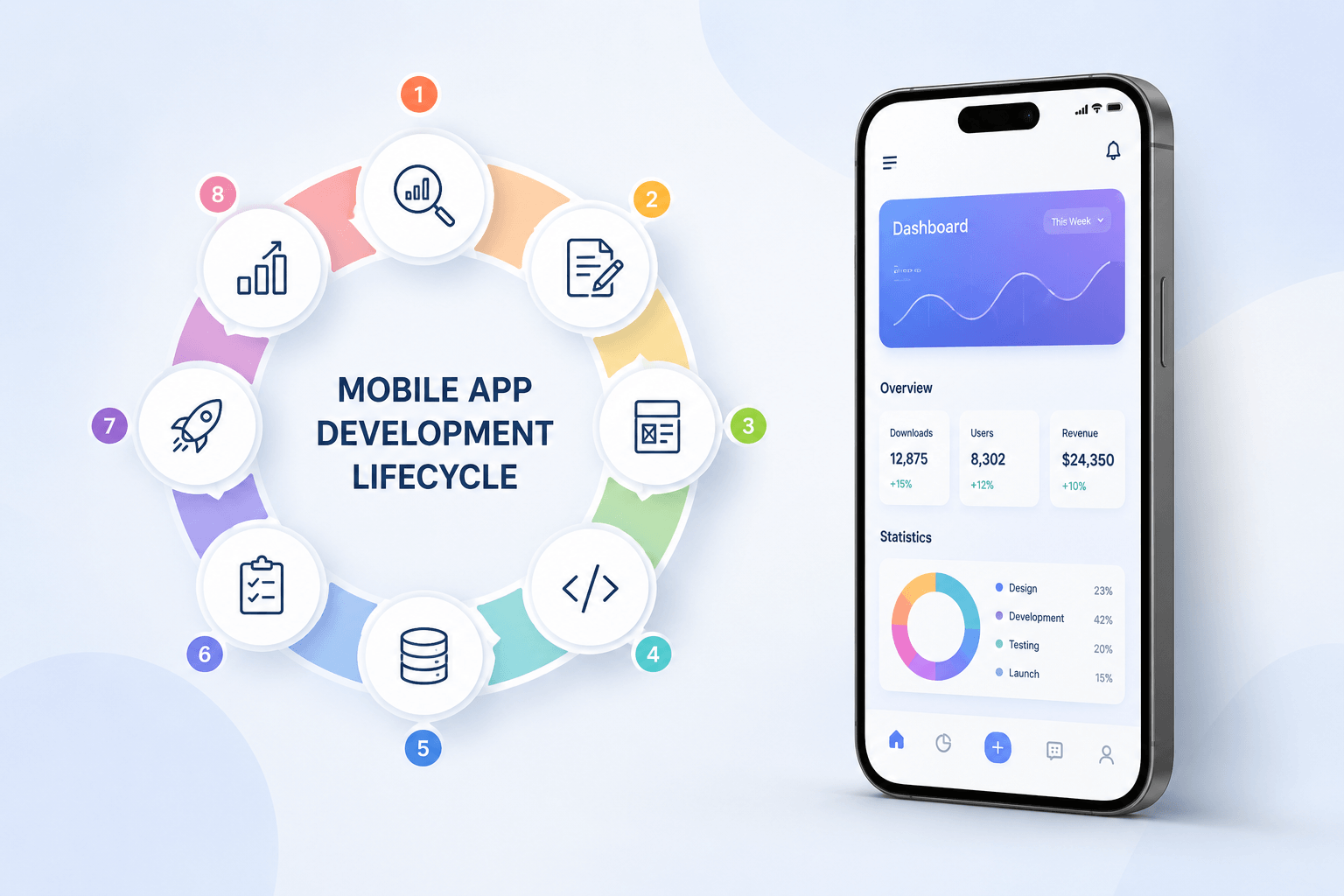
Mobile App Development Lifecycle: Complete 2026 Guide (8 Stages)
Book your consultation now
Related Post