How Long Does It Take to Build an App in 2026? Complete Timeline, Cost & Development Guide
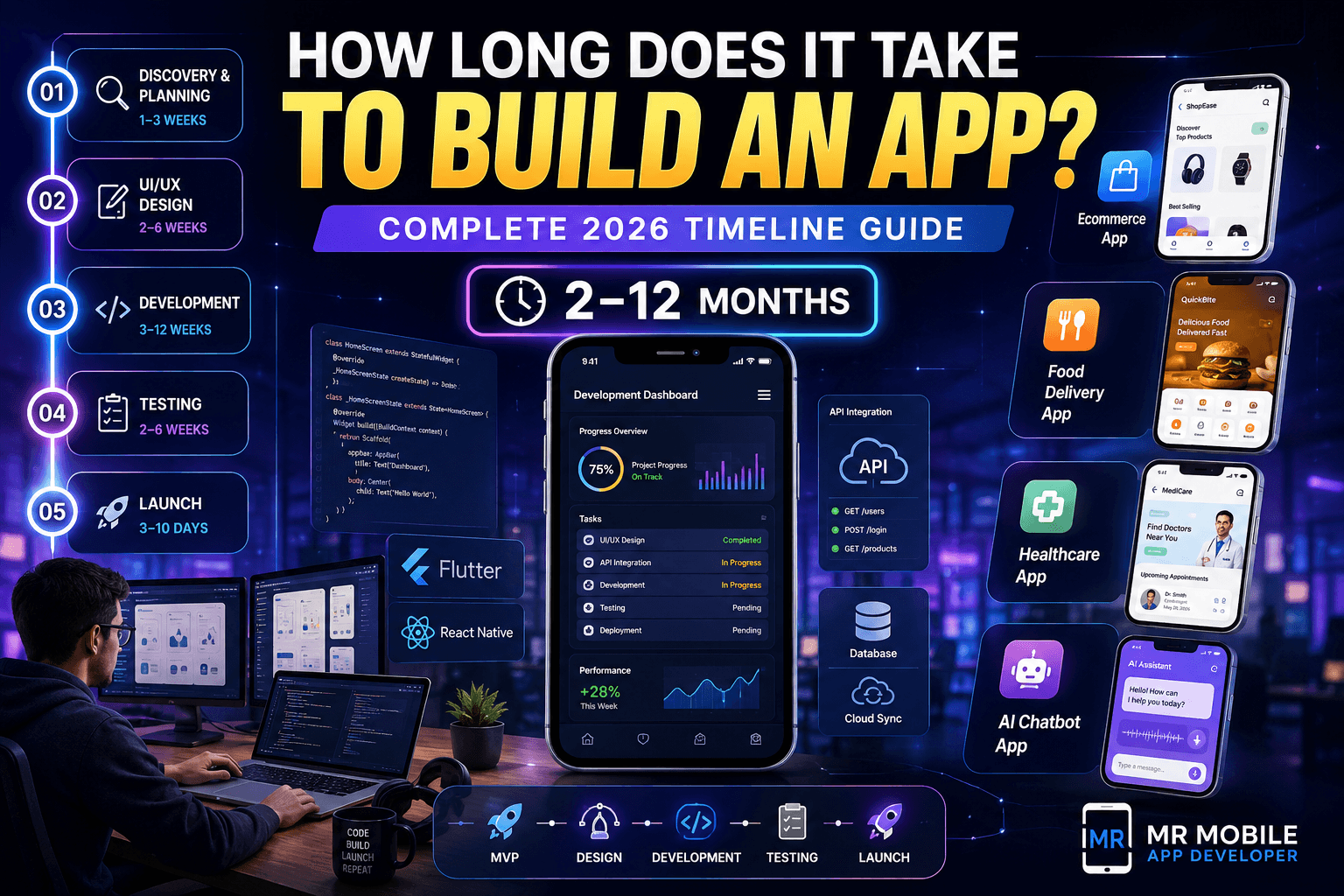
Most mobile apps take between 2 and 12 months to build. A simple app may take 8–12 weeks, while a complex app like Uber, Airbnb, or an AI-powered platform can take 6–12+ months depending on features, integrations, and team size.
If you’re planning to build an app in 2026, one of the first questions you’ll ask is:
“How long does it take to build an app?”
The answer depends on multiple factors including app complexity, platform choice, design requirements, integrations, testing, and development methodology.
In this guide, you’ll learn:
- Average app development timelines
- Timeline by app type
- Timeline by feature
- MVP vs full product timelines
- Factors that slow development
- Ways to launch faster
- Cost implications
- Real-world examples
- Expert insights from Mr Mobile App Developer
How Long Does It Take to Build an App?
App Complexity | Development Time |
Simple App | 2–4 Months |
Medium Complexity App | 4–8 Months |
Complex App | 8–12+ Months |
AI-Powered App | 6–12+ Months |
Enterprise App | 12–18+ Months |
Featured Snippet Answer
Most mobile apps take between 3 and 9 months to develop. A basic app with limited functionality may be completed in 2–4 months, while complex apps requiring custom APIs, AI features, real-time communication, or enterprise integrations often take 6–12 months or longer.
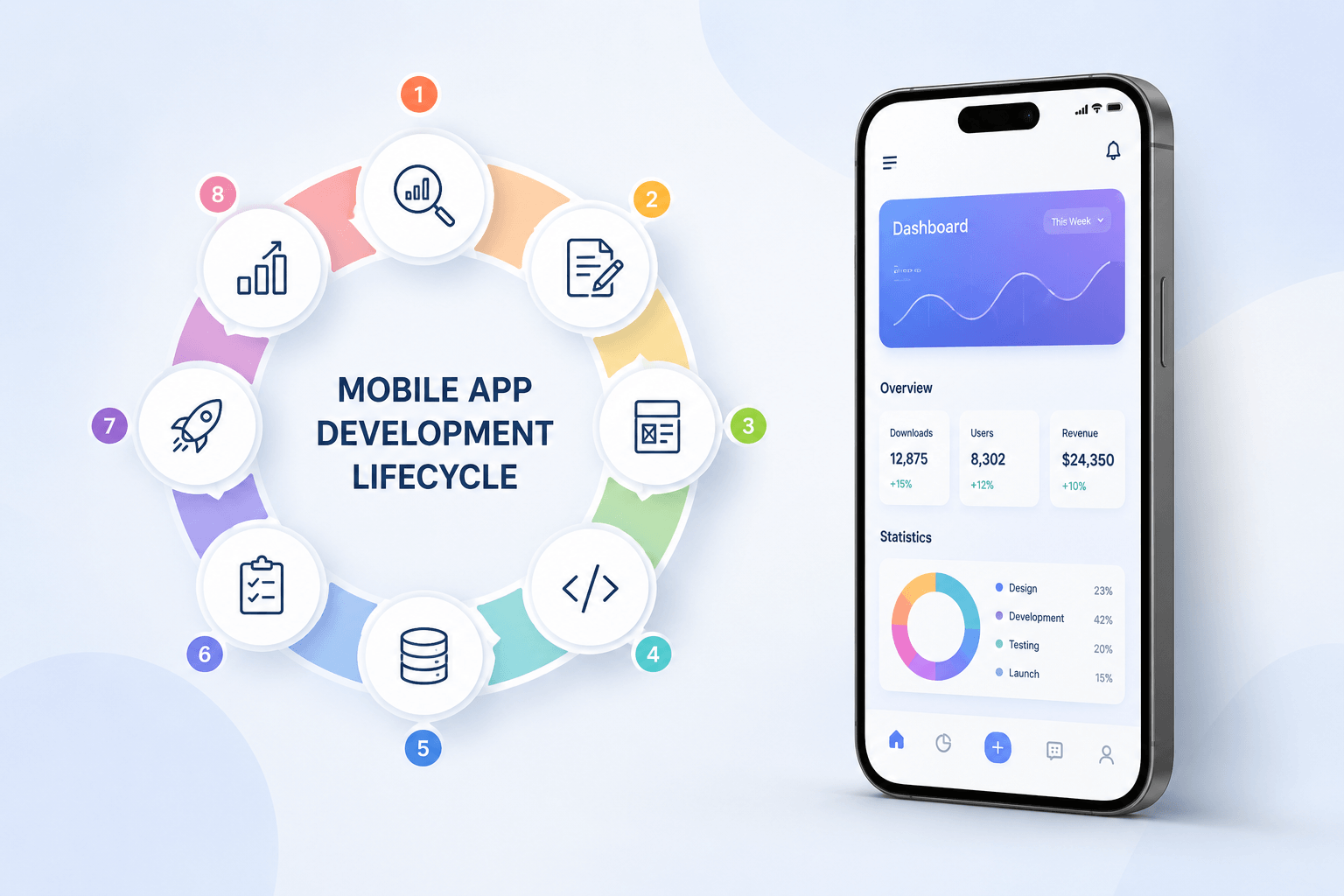
Mobile App Development Timeline Overview
Every successful app follows a structured development process.
Phase | Estimated Duration |
Discovery & Planning | 1–3 Weeks |
UI/UX Design | 2–6 Weeks |
Backend Development | 3–12 Weeks |
Frontend Development | 4–12 Weeks |
API & Integrations | 1–4 Weeks |
Testing & QA | 2–6 Weeks |
App Store Launch | 3–10 Days |
Total timeline depends on how much overlap exists between phases.
Mobile App Development Timeline Calculator
The following table provides realistic estimates for common app features.
Feature | Estimated Development Time |
User Registration | 2–5 Days |
Social Login | 1–3 Days |
User Profiles | 3–7 Days |
Push Notifications | 2–5 Days |
Payment Gateway | 5–10 Days |
GPS & Maps | 5–12 Days |
Chat & Messaging | 10–20 Days |
Video Calling | 15–30 Days |
AI Chatbot Integration | 10–25 Days |
Admin Dashboard | 7–15 Days |
Subscription System | 5–10 Days |
Analytics Integration | 2–4 Days |
The more features you add, the longer development takes.
What Factors Affect App Development Time?
1. App Complexity
Complexity is the biggest factor affecting development speed.
Simple Apps
Examples:
- Calculator Apps
- To-Do Apps
- Business Portfolio Apps
- Event Apps
Timeline:
2–4 Months
Medium Complexity Apps
Examples:
- Ecommerce Apps
- Fitness Apps
- Learning Apps
- Appointment Booking Apps
Timeline:
4–8 Months
Complex Apps
Examples:
- Uber-like Apps
- Airbnb-like Platforms
- Healthcare Systems
- Fintech Applications
- AI Agent Platforms
Timeline:
8–12+ Months
Timeline by Popular App Category
How Long Does It Take to Build an Ecommerce App?
Timeline:
4–9 Months
Features:
- Product Catalog
- Payments
- Order Tracking
- Customer Accounts
How Long Does It Take to Build a Food Delivery App?
Timeline:
4–8 Months
Features:
- Restaurant Listings
- GPS Tracking
- Online Payments
- Driver Management
How Long Does It Take to Build an Uber-Like App?
Timeline:
6–12 Months
Features:
- Rider App
- Driver App
- Real-Time GPS
- Payments
- Admin Dashboard
How Long Does It Take to Build a Healthcare App?
Timeline:
6–10 Months
Features:
- Appointment Booking
- Video Consultation
- Medical Records
- Notifications
How Long Does It Take to Build an AI App?
Timeline:
6–12+ Months
Features:
- AI Models
- Chat Interfaces
- Knowledge Bases
- Workflow Automation
Detailed Breakdown of Every Development Phase
Phase 1: Discovery & Strategy
Estimated Time:
1–3 Weeks
Activities:
- Market Research
- Competitor Analysis
- Feature Planning
- User Journey Mapping
- Technical Architecture
Deliverables:
- Product Requirements Document
- Development Roadmap
- Wireframes
Skipping this stage often leads to delays later.
Phase 2: UI/UX Design
Estimated Time:
2–6 Weeks
Activities:
- Wireframes
- User Flows
- Prototypes
- Visual Design
- Design System Creation
A well-designed app reduces development rework and improves conversion rates.
Phase 3: Backend Development
Estimated Time:
3–12 Weeks
Includes:
- Database Setup
- APIs
- Authentication
- Cloud Infrastructure
- Admin Panel
Common Technologies:
- Node.js
- Laravel
- Django
- Firebase
- AWS
Phase 4: Frontend Development
Estimated Time:
4–12 Weeks
Developers build:
- Screens
- Navigation
- Animations
- User Interactions
Popular Frameworks:
- Flutter
- React Native
- Swift
- Kotlin
Phase 5: Third-Party Integrations
Estimated Time:
1–4 Weeks
Examples:
- Stripe
- Razorpay
- Google Maps
- Firebase
- OpenAI
- Twilio
Phase 6: Quality Assurance Testing
Estimated Time:
2–6 Weeks
Testing Types:
- Functional Testing
- Security Testing
- Performance Testing
- Device Testing
- User Acceptance Testing
Apps that skip testing often face expensive fixes after launch.
Phase 7: Launch & Deployment
Estimated Time:
3–10 Days
Apple App Store
Review Time:
1–7 Days
Google Play Store
Review Time:
1–3 Days
MVP vs Full Product Timeline
MVP Development Timeline
Estimated Time:
8–16 Weeks
An MVP focuses only on core features.
Benefits:
- Faster launch
- Lower cost
- User validation
- Reduced risk
Full Product Development Timeline
Estimated Time:
6–12+ Months
Benefits:
- Advanced functionality
- Scalability
- Enterprise readiness
For most startups, launching an MVP first is the smartest approach.
How Flutter Can Reduce Development Time
Flutter allows businesses to build Android and iOS apps using a single codebase.
Benefits include:
- 30–40% faster development
- Lower maintenance costs
- Faster feature releases
- Consistent UI across platforms
This is one reason many startups choose Flutter for MVP development.
Common Reasons App Projects Get Delayed
Many projects exceed their planned timeline because of:
Scope Creep
Adding features during development.
Unclear Requirements
Poor planning leads to rework.
Inexperienced Developers
Mistakes create delays.
Third-Party Integration Challenges
External systems often require additional work.
Poor Communication
Misalignment between stakeholders and developers.
How to Launch Your App Faster
Start With an MVP
Launch core functionality first.
Use Cross-Platform Development
Flutter and React Native reduce development time.
Create Clear Documentation
Well-defined requirements prevent delays.
Work With Experienced Developers
Experienced teams solve problems faster.
Prioritize Features
Focus on must-have features for version one.
How Development Time Impacts Cost
Generally, longer projects cost more.
App Type | Estimated Cost |
Simple App | $5,000–$20,000 |
Medium App | $20,000–$80,000 |
Complex App | $80,000–$300,000+ |
The fastest way to reduce cost is often reducing unnecessary features.
Why Businesses Choose Mr Mobile App Developer
At Mr Mobile App Developer, we specialize in helping startups and businesses launch high-quality mobile applications efficiently.
Our Expertise
- Flutter App Development
- iOS App Development
- Android App Development
- AI App Development
- SaaS App Development
- Marketplace Apps
- Healthcare Apps
- Ecommerce Apps
Why Clients Work With Us
✓ Agile Development Process
✓ Dedicated Developers
✓ Transparent Communication
✓ Faster Delivery Timelines
✓ Startup-Friendly Pricing
✓ Ongoing Maintenance & Support
From idea validation to App Store launch, we help businesses turn concepts into successful digital products.
Frequently Asked Questions
Can an app be built in 30 days?
Yes, but only simple MVPs with limited functionality.
How long does it take to build an MVP?
Typically 8–16 weeks.
How long does it take to build an ecommerce app?
Usually 4–9 months.
Does Flutter speed up app development?
Yes. Flutter can reduce development time by 30–40%.
Why do apps take so long to build?
Complex features, integrations, testing, and security requirements increase development time.
How long does App Store approval take?
Typically 1–7 days.
Can AI reduce app development time?
AI tools can accelerate coding, testing, and documentation, but human developers are still required.
How long does it take to build an AI chatbot app?
Most AI chatbot apps require 6–12 months depending on complexity.
What is the fastest way to build an app?
Develop an MVP using Flutter with clearly defined requirements.
How many developers are needed to build an app?
Most projects require a designer, frontend developer, backend developer, QA engineer, and project manager.
Get best mobile app development services
Develop your business app
Conclusion
So, how long does it take to build an app?
For most businesses, the answer ranges from 2 to 12 months, depending on complexity and development approach. The fastest path to market is usually starting with an MVP, validating demand, and expanding features based on real user feedback.
If you’re planning to build an app in 2026, the team at Mr Mobile App Developer can help you estimate timelines, define requirements, and launch your product faster while avoiding costly mistakes.
Ready to build your app? Contact Mr Mobile App Developer today for a free project consultation and timeline estimate.
Quality Service For You
We deliver unique and blended experiences to our customers across the globe. From idea to execution and launch, we do ALL.
Backend Development:
Table of Contents
How to Calculate ROI for Mobile App Development in 2026
Mobile App Development Lifecycle: Complete 2026 Guide (8 Stages)