
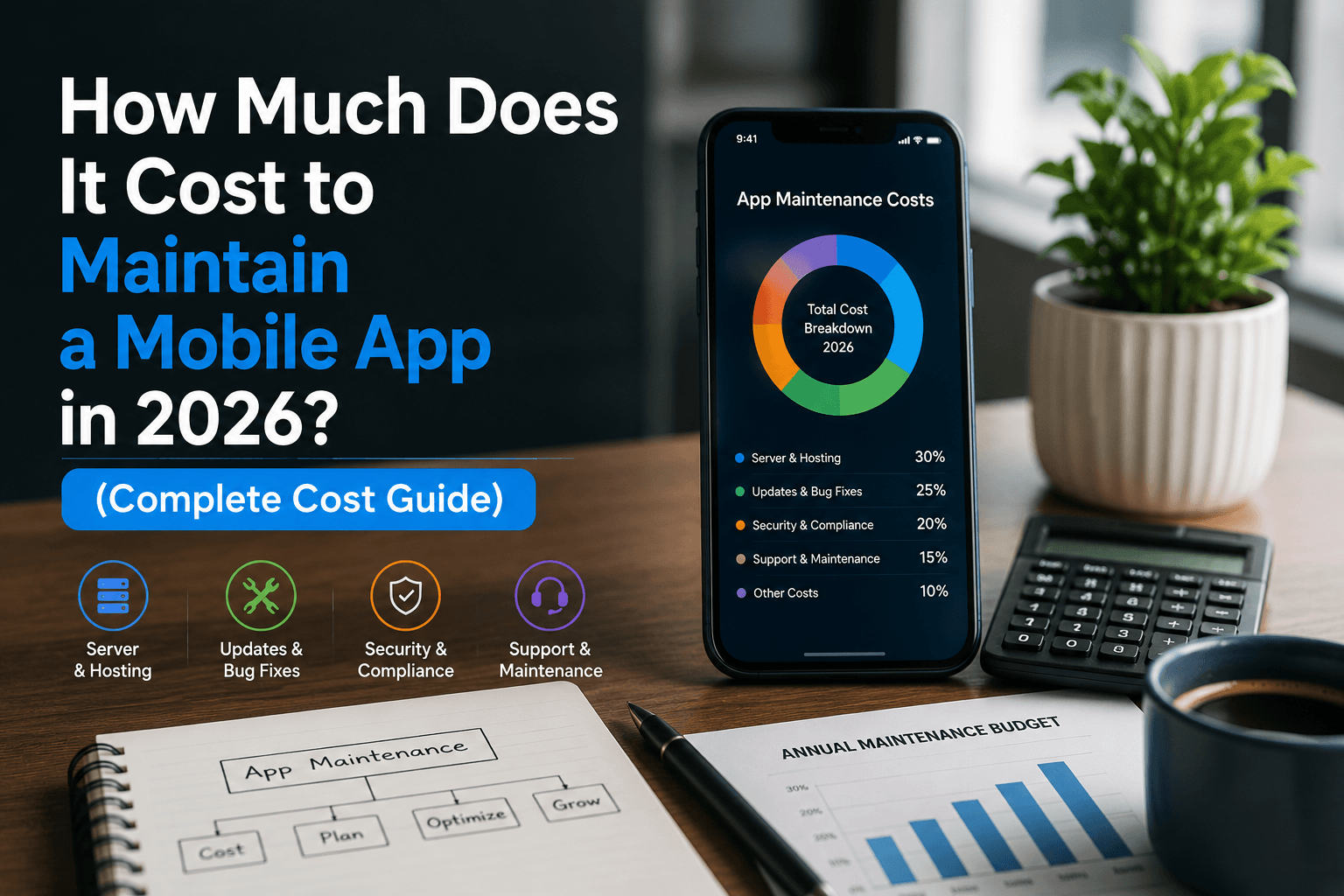
How Much Does It Cost to Maintain a Mobile App in 2026? (Complete Cost Guide)
Introduction
Launching a mobile app is a milestone, not a finish line. At Mr Mobile App Developer, founders come to us right after their app goes live, and almost all of them ask a version of the same question: “Now that it’s built, how much will it cost every month just to keep it running?”
Development is a one-time investment. Maintenance is a recurring one — and it doesn’t stop as long as the app stays live. Most budget overruns in the first year after launch don’t come from a bad build; they come from underestimating ongoing maintenance.
This guide breaks down the real, practical cost of maintaining a mobile app in 2026 — across eCommerce, on-demand, content, utility, and marketplace apps — so you can plan a realistic budget instead of guessing.
Running a SaaS product specifically? See our dedicated breakdown: How Much Does It Cost to Maintain a SaaS Mobile App Monthly in 2026? This guide covers every other app category.
Quick Answer: Mobile App Maintenance Cost in 2026
The estimated monthly maintenance cost of a mobile app in 2026 is: • Basic App (utility, content, small business): ₹8,000 – ₹40,000 per month (~$100 – $500) • Mid-Complexity App (eCommerce, booking, on-demand): ₹40,000 – ₹1,50,000 per month (~$500 – $1,800) • Enterprise / High-Traffic App (marketplace, fintech, AI-powered): ₹1,50,000 – ₹6,00,000+ per month (~$1,800 – $7,200+) |
As an annual rule of thumb, mobile app maintenance typically costs 15% to 20% of the original app development cost every year. This benchmark holds consistently across our eCommerce and on-demand client projects and matches standard industry guidance.
What Mobile App Maintenance Actually Includes
Maintenance is often mistaken for “just fixing bugs.” In reality, it covers several ongoing technical and operational responsibilities:
Bug Fixes and Performance Optimization
Continuous monitoring to catch and resolve crashes, slow load times, and UI or API-related issues before users notice them.
Hosting and Server Costs
Cloud hosting (AWS, Google Cloud, Firebase) costs that scale with traffic, storage, and data usage.
OS Compatibility Updates
iOS and Android release frequent updates. Apps must be updated to stay compatible and avoid crashes or store removal.
Security Patches and Compliance
Regular updates to protect user data, payment systems, and backend APIs from vulnerabilities.
Third-Party API and Integration Costs
Payment gateways, SMS/email providers, analytics tools, and mapping or AI APIs typically carry their own recurring usage-based fees.
App Store and Play Store Compliance
Policy changes from Apple and Google can require urgent updates to avoid app suspension.
Feature Enhancements
Ongoing improvements based on user feedback and analytics to keep retention and ratings healthy.
Monthly Maintenance Cost by App Type
Maintenance cost varies significantly by app category, since each type carries a different mix of infrastructure, integrations, and support needs.
App Type | Monthly Cost Range (INR) | What Drives the Cost |
Content / Utility App | ₹8,000 – ₹40,000 | Basic hosting, occasional bug fixes, OS updates |
eCommerce App | ₹40,000 – ₹1,50,000 | Payment gateway uptime, catalog updates, order tracking, seasonal traffic spikes |
On-Demand / Booking App | ₹50,000 – ₹1,80,000 | Real-time tracking, push notifications, multi-role dashboards |
Marketplace App (2-sided) | ₹70,000 – ₹2,50,000 | Vendor & admin panels, commission logic, dispute handling |
SaaS / AI-Powered App | ₹60,000 – ₹8,00,000+ | See our dedicated SaaS maintenance guide |
Monthly Maintenance Cost Breakdown by Category
Regardless of app type, here’s how a typical monthly maintenance budget is distributed:
Category | Monthly Cost Range (INR) |
Hosting & Infrastructure | ₹4,000 – ₹1,50,000+ |
Bug Fixes & Technical Support | ₹8,000 – ₹1,00,000 |
Monitoring & DevOps | ₹4,000 – ₹40,000 |
Third-Party Integrations | ₹4,000 – ₹1,50,000+ |
Feature Updates & Scaling | ₹15,000 – ₹2,00,000+ |
Key Factors That Affect Maintenance Cost
- App Complexity — simple utility apps cost far less to maintain than real-time or AI-powered apps.
- Platform Coverage — maintaining iOS, Android, or both affects support hours.
- User Base Size — more active users means higher server load, bandwidth, and support volume.
- Real-Time Features — chat, live tracking, or live dashboards need more server resources.
- Number of Third-Party Integrations — each integration is a potential point of failure and a recurring fee.
- In-House Team vs Outsourced Retainer — dedicated staff costs more monthly but responds faster; a retainer model is usually more predictable for startups.
Hidden Costs Most Founders Overlook
- App Store / Play Store policy changes forcing urgent, unplanned updates.
- Major OS version releases (iOS/Android) breaking existing compatibility.
- Third-party API price increases or sudden deprecations.
- Emergency production bug fixes outside a standard support window.
- Server scaling costs during traffic spikes — sales events, promotions, or viral growth.
These hidden costs can add 15% to 30% on top of a base maintenance budget if they aren’t planned for in advance.
Real-World Maintenance Scenarios
Small Business / Utility App
₹8,000 – ₹40,000 per month — basic hosting, minimal support, small user base.
Growing eCommerce or On-Demand App
₹50,000 – ₹1,80,000 per month — active users, regular feature updates, scaling infrastructure.
Enterprise or High-Traffic Platform
₹1,80,000 – ₹6,00,000+ per month — high-traffic systems, multiple integrations, dedicated support and DevOps.
The Annual Maintenance Rule of Thumb
A widely used industry benchmark — one we apply consistently across client projects, including our eCommerce app development cost guide — is that annual maintenance costs approximately 15% to 25% of the original app development budget. So a $30,000 app should realistically budget $4,500–$7,500 per year in maintenance, scaling up as the user base and feature set grow.
How to Reduce Mobile App Maintenance Costs
- Build with a scalable architecture from day one to avoid expensive restructuring later.
- Use cross-platform frameworks like Flutter or React Native to maintain a single codebase instead of two.
- Avoid unnecessary third-party integrations that add recurring, hard-to-track fees.
- Automate monitoring and crash reporting to catch issues before they escalate.
- Choose a fixed monthly maintenance retainer over ad-hoc hourly fixes for predictable budgeting.
Frequently Asked Questions
How much does it cost to maintain a mobile app monthly?
Monthly mobile app maintenance typically ranges from ₹8,000 for a basic app to ₹6,00,000+ for an enterprise-grade or high-traffic platform, depending on complexity, user base, and integrations.
Is app maintenance a one-time cost?
No. Maintenance is an ongoing, recurring cost for as long as the app is live — typically 15% to 20% of the original development cost every year.
What is included in mobile app maintenance?
Bug fixes, hosting and server costs, OS compatibility updates, security patches, third-party API costs, app store compliance, and feature enhancements.
Do I need a dedicated maintenance team?
Not necessarily. Most startups and SMBs are better served by a fixed monthly maintenance retainer with a development partner, reserving an in-house team for high-traffic or enterprise-scale apps.
How does eCommerce app maintenance cost compare to SaaS app maintenance? eCommerce app maintenance (₹40,000–₹1,50,000/month) is generally lower than SaaS maintenance (₹60,000–₹8,00,000+/month), since SaaS platforms carry additional multi-tenancy, subscription billing, and infrastructure-scaling overhead. See our SaaS-specific cost guide for a full breakdown.
Expert Insight from Mr Mobile App Developer
Standard industry budgeting benchmark: • Annual maintenance cost ≈ 15% to 25% of total development cost. • Apps with real-time features or AI integration may exceed this range without scalable architecture. • The most cost-efficient apps aren’t the ones with the lowest maintenance spend — they’re the ones built with optimized infrastructure from day one. |
Final Verdict
Mobile app maintenance isn’t optional — it’s a core operational cost of running a successful app, not an afterthought to budget for later.
Without proper planning, even a well-built app can lose users to crashes, security issues, or outdated compatibility. With the right budget and the right maintenance partner, an app stays stable, secure, and ready to scale.
About Mr Mobile App Developer
Mr Mobile App Developer has 22+ years of experience and has delivered 550+ apps across 24 countries, with an A+ client satisfaction rating. The focus is on long-term architecture planning, cost optimization, and scalable system design — including ongoing mobile app support and maintenance for eCommerce, on-demand, SaaS, and enterprise apps.
Website: www.mrmobileappdeveloper.com
Explore maintenance plans: Mobile Support & Maintenance Services
Ready to plan your maintenance budget? Get a free consultation
Get best mobile app development services
Develop your business app
Conclusion
Mobile app maintenance is an ongoing investment that keeps your app secure, fast, and compatible with the latest technologies. By planning for hosting, updates, bug fixes, security, and feature enhancements, you can avoid unexpected costs and ensure long-term success.
At Mr Mobile App Developer, we’ve helped businesses worldwide build and maintain 550+ mobile apps over 22+ years. If you’re looking for expert guidance or a reliable maintenance partner, we’re here to help you create a cost-effective plan that supports your app’s growth.
Quality Service For You
We deliver unique and blended experiences to our customers across the globe. From idea to execution and launch, we do ALL.
Backend Development:
Table of Contents
Why Mobile Apps Fail After Launch: 15 Common Reasons and How to Prevent Them

How to Calculate ROI for Mobile App Development in 2026
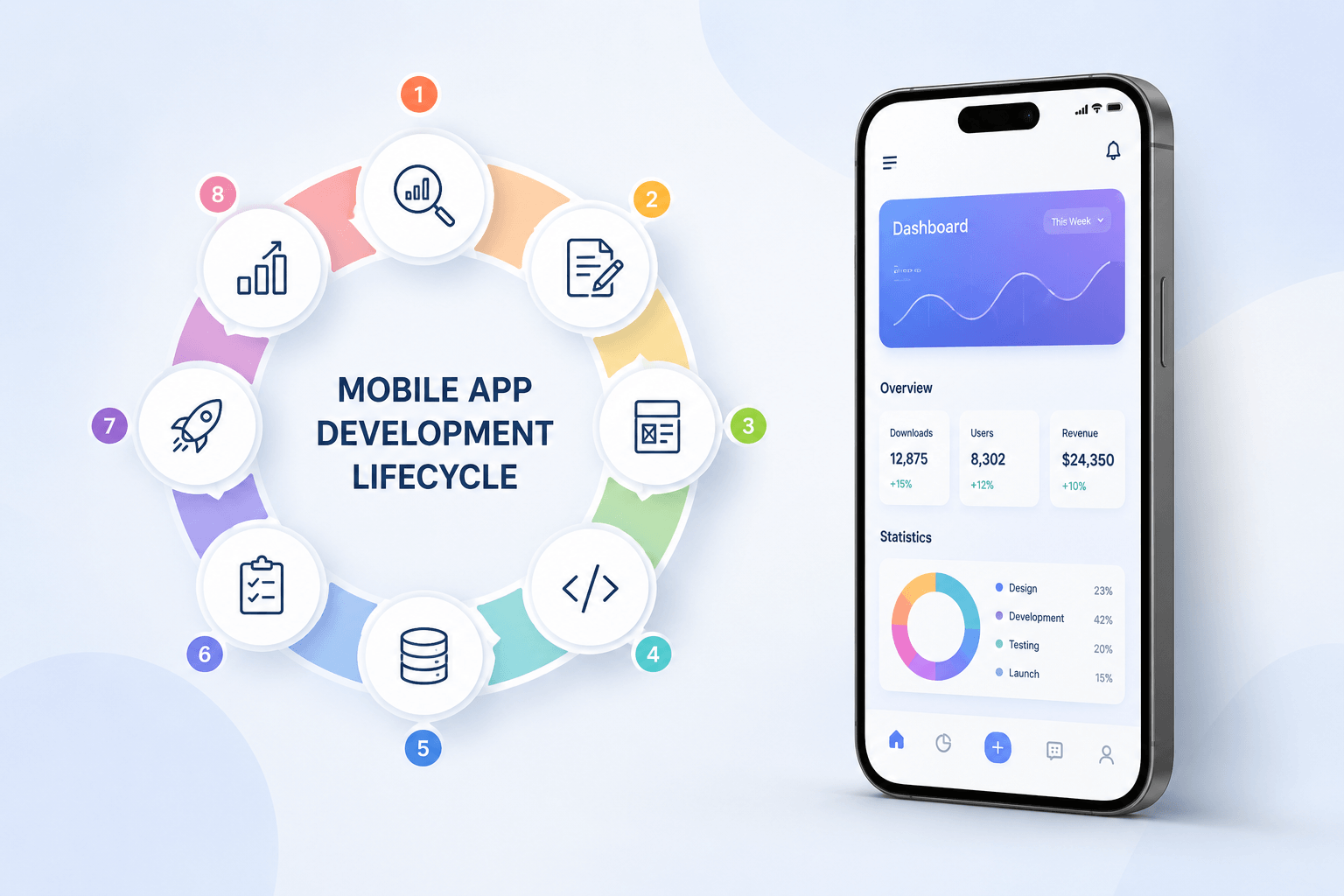
Mobile App Development Lifecycle: Complete 2026 Guide (8 Stages)

Book your consultation now
Related Post